


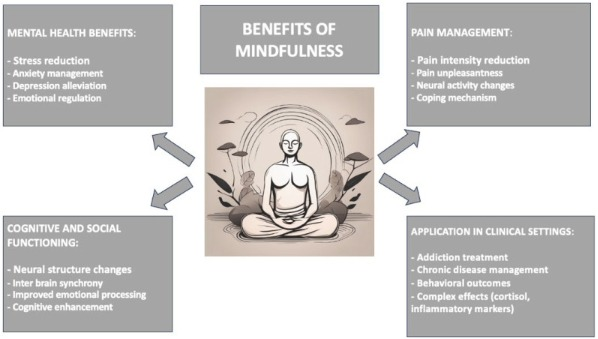
Mindfulness positively engages neuroplasticity, providing tangible benefits in social engagement, health, and productivity.
The ancient practice of mindfulness, or meditation is gaining recognition. Neuroscience now validates what thousands of practitioners have known for millennia.
While many practices support mindfulness, the core principles of mindfulness complement the holistic approach of biodynamic craniosacral therapy. Supporting nervous system and emotional regulation through somatic (body-based) awareness.
Rewiring the Brain: The Neuroscience of Mindfulness
At its core, mindfulness is the practice of paying attention to the body in present time without judgment or reactivity. This is done via navigating awareness to the felt-sense, a term given to sensations occurring moment to moment helping the rewire any dissociative tendencies caused by trauma or stress on the body that fragment the minds cognitive capacities.
Meditation is the formal practice that cultivates essential skills which maintain mind-body coherence and healthy functioning.
So, what exactly happens in the brains during the practice of Mindfulness?
Strengthening of the Prefrontal Cortex: This area, often dubbed the “executive control center,” is responsible for functions like attention, decision-making, and emotional regulation. Studies show that regular meditators have increased gray matter in this region, leading to improved focus and better impulse control. This means less distraction and a greater ability to choose responses and less reactivity.
Downregulating the Amygdala: Reduced Fear and Improved Confidence
The amygdala is the brain’s alarm system, responsible for “fight/flight” responses. Modern lifestyles are seeing remarkable increases in stress and anxiety where reactivity becomes increasingly commonplace. Mindfulness meditation helps to reduce the size and activity of the amygdala, and the unecessary engagement of fear. Mindfulness practitioners are able to turn down the volume of the stress response. As evidenced in the online article published on Online National Library of Medicine.
Mindfulness and Meditation allows practitioners to approach challenging situations with greater calm and clarity.
Enhancing Brain Connectivity: Mindfulness practices improve the communication between different brain regions, particularly between the prefrontal cortex and the amygdala. This enhanced connectivity allows for better emotional regulation – Which allows the rational brain to function more effectively and soothes any dysregulated emotions.
Neuroplasticity in Action: The remarkable ability of the brain to change and adapt throughout life is called neuroplasticity. Mindfulness and meditation are what fundamentally supports neuroplasticity. The capacity to alter the way we see the world, functional capacities and sense of agency in the world. Mindfulness doesn’t just temporarily alter brain chemistry; it fundamentally reshapes the brain’s internal structure. Over time, mindfulness creates a resilient, calm, and focused mind. As evidenced in this article.
Social Engagement: Connecting with Presence
One of the less-talked-about but profound benefits of mindfulness is its impact on social engagement and the development of attachment and bonding, a essential component of healthy human lives. Studies indicate those with healthy attachments and social bonds live happier and longer lives.
Improved Empathy and Compassion: By cultivating present-moment awareness and non-judgment, we become more attuned to our own internal states, which naturally extends to understanding others. Studies show meditators exhibit increased activity in brain regions associated with empathy.
Mindfulness meditation is demonstrated to support active listening, the development of compassion, and effective collaboration.